I led the frontend architecture for Clusteer, a peer-to-peer exchange that converts stablecoins like USDT and USDC directly into Nigerian Naira. The product lives or dies on two things — speed and trust — so every part of the interface had to make traders feel like the number they see is the number they get.
My role
I joined when the team needed someone to own the frontend end-to-end, from the marketing site down to the trading dashboard. The brief was deceptively simple: ship a product that feels instant and trustworthy in a category where users won't tolerate either slowness or ambiguity. That meant rebuilding the foundation in Next.js and TypeScript, and making decisions about state, data flow, and real-time updates that would hold up as the platform scaled past its first ninety thousand users.
I worked closely with the design team to translate a clean, mobile-first system into production, while keeping the frontend lean enough that rate updates, balance changes, and order transitions never felt stale. Most of the engineering effort was invisible — the goal was for traders to stop noticing the interface and just move money.
Wallets and the trading dashboard
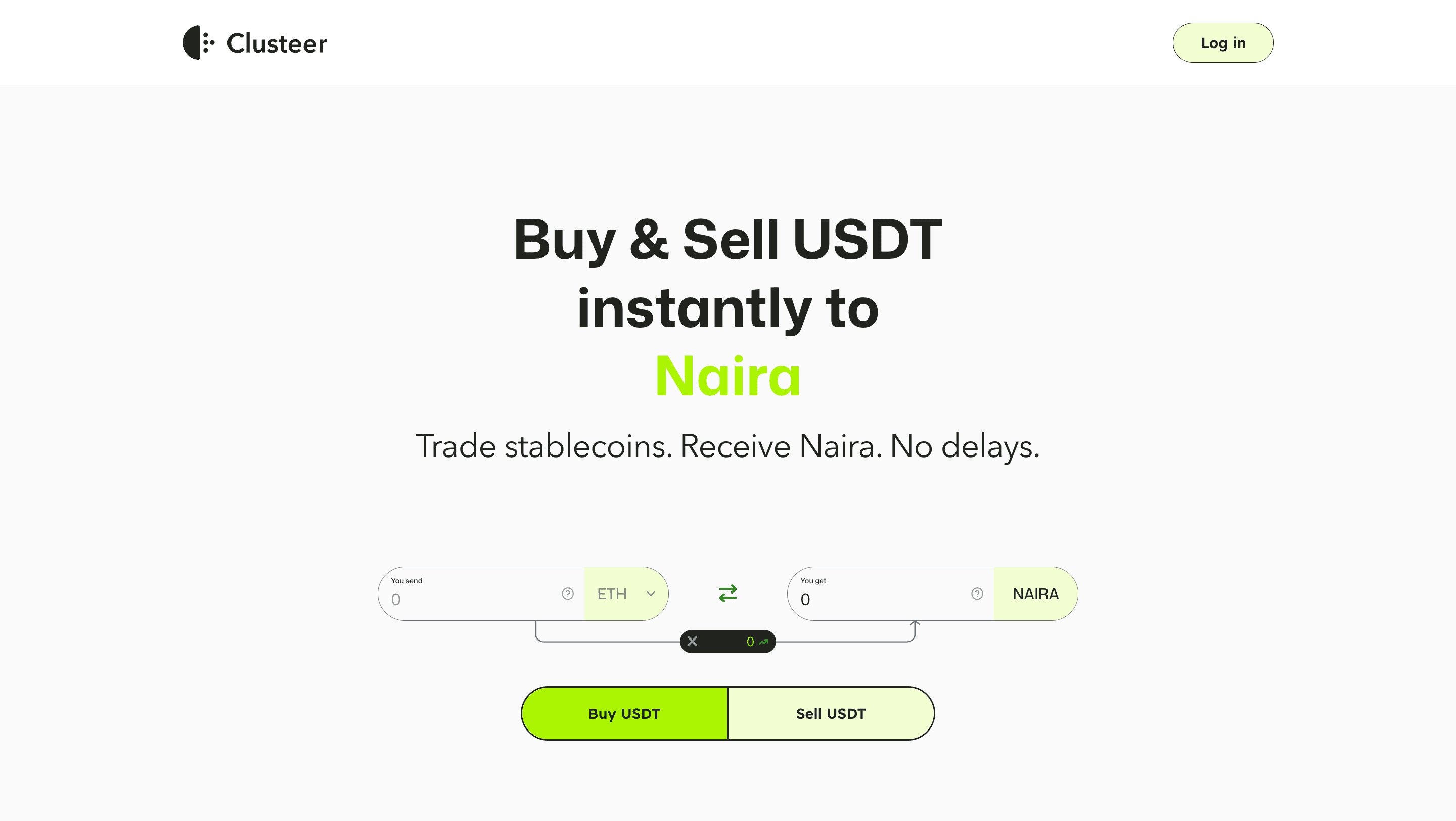
Clusteer supports five blockchains — Solana, TRON, Ethereum, and BSC — with stablecoins on each. I built a wallet abstraction so the UI treats every chain identically: a deposit on TRON renders the same way as one on Solana, even though the underlying confirmation models are different. Real-time synchronization was the harder problem. Balances had to reflect on-chain state the moment a transfer confirmed, without polling every wallet on every render, so I leaned on subscription channels and selective revalidation to keep the dashboard in sync with the backend's view of each address.
The order management table is where traders spend most of their time, so it had to be dense without being noisy. I built it on TanStack Table with server-side pagination for the volume Clusteer handles, and client-side filtering and sorting so traders can slice their history without round-tripping to the server. Orders move through several states — pending, matched, settling, completed — and each transition is driven by socket updates with optimistic UI underneath, so the table never feels stuck waiting.
Notifications and compliance
Trading is time-sensitive, so users had to hear about transactions instantly — even when the tab was closed. I wired up Firebase Cloud Messaging with a custom service worker that handles background delivery across browsers and mobile devices, and deep-links the user straight back to the relevant order when they tap a notification. Less urgent events route through a quieter in-app channel, so the push pipeline stays focused on things people actually need to act on.
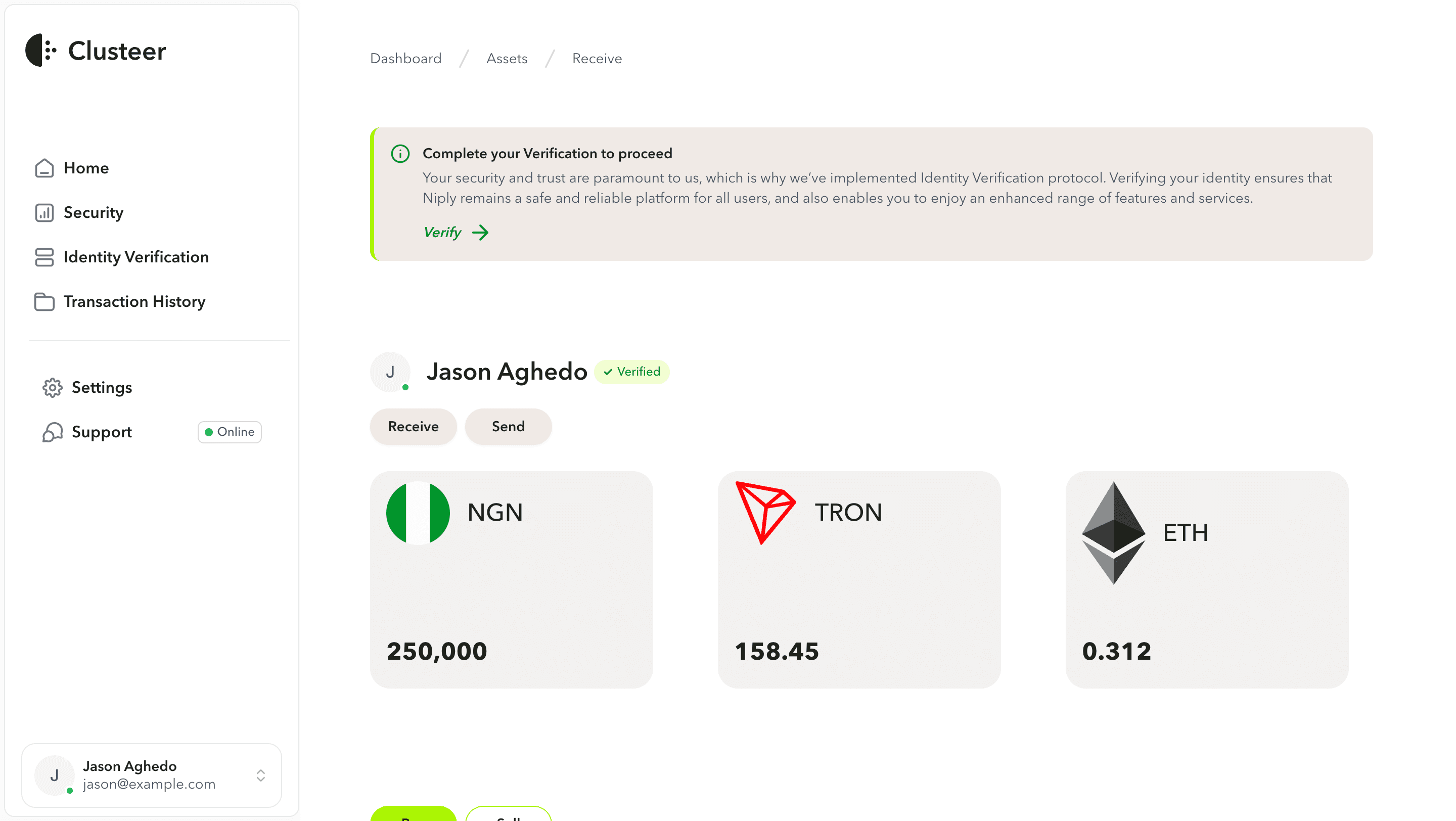
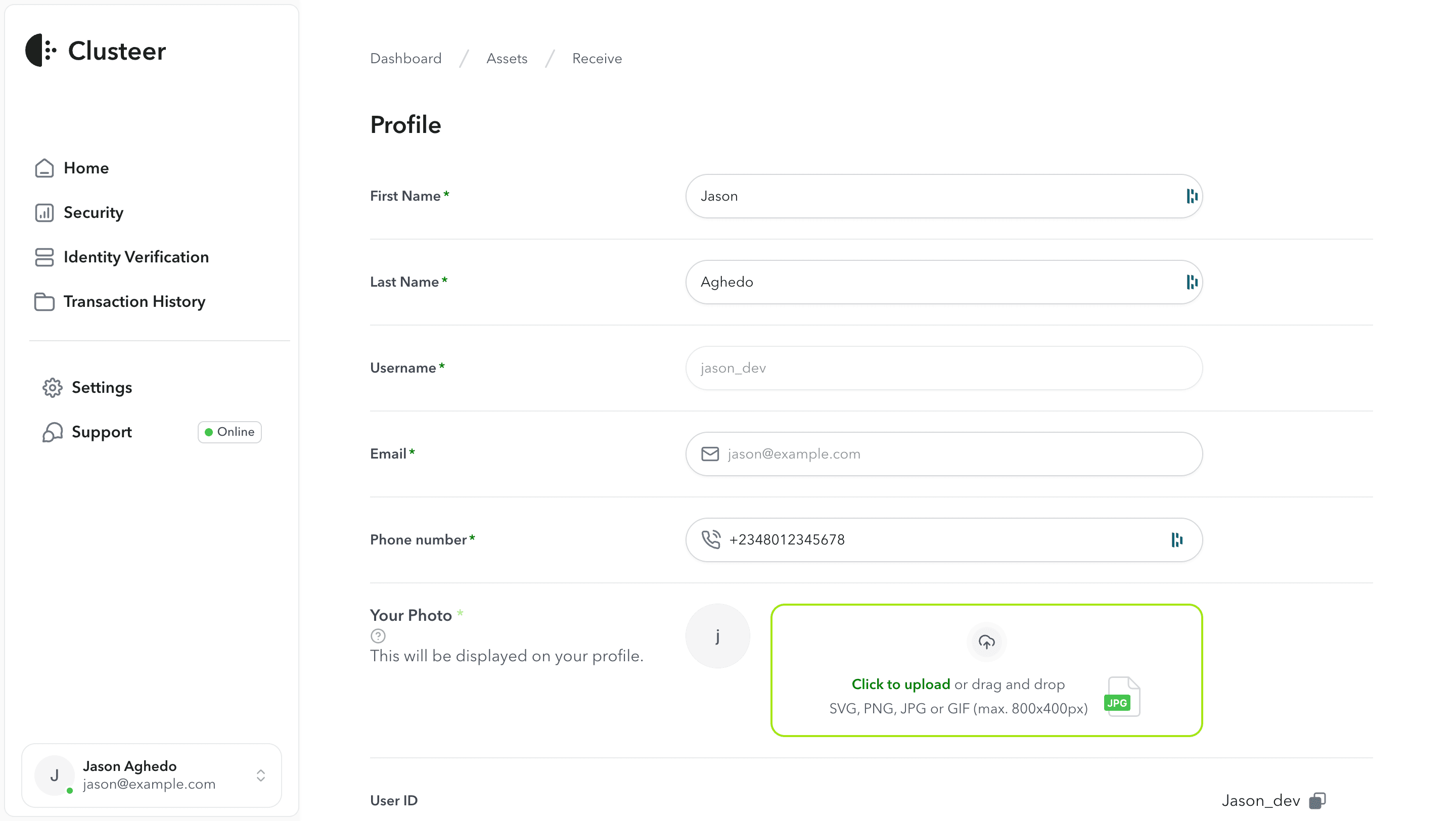
Compliance was non-negotiable. I built a modular KYC flow using React Hook Form and Zod, with dynamic routing that adapts to what the user has already completed and retry logic that doesn't lock anyone out when a verifier is momentarily down. BVN and NIN checks run against the relevant providers, and the same composable steps are reused on the admin side when a manual review is needed.
What shipped
- A Next.js frontend serving the marketing site, dashboard, and admin tools
- Real-time wallet synchronization across five chains
- A transaction and order dashboard built on TanStack Table with live status tracking
- Push notifications for transactions and security events via FCM and a custom service worker
- A modular KYC system handling BVN and NIN verification end-to-end